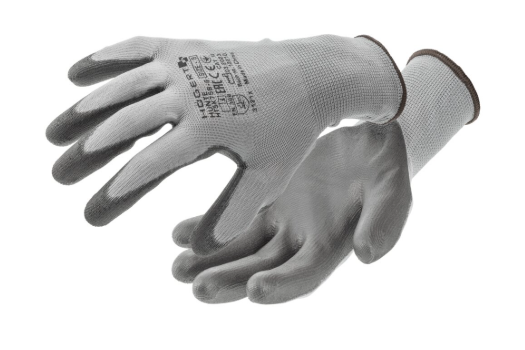

For tasks that demand both fine motor precision and reliable hand protection, polyurethane coated gloves have become the industry standard. The thin, flexible polyurethane coating provides an excellent grip on smooth, dry surfaces while preserving enough tactile sensitivity for workers to handle small components, delicate parts, and precision tools without difficulty.
What Makes Polyurethane Coating Unique?
Material Properties and Performance
Polyurethane is a polymer with properties that make it exceptionally well-suited for glove coatings. It forms a smooth, thin film that conforms closely to the hand’s surface, providing grip without adding significant bulk. Unlike latex coatings, polyurethane is free from latex proteins, making it suitable for workers with latex allergies.
The material also resists mild oils and solvents, enhancing grip in environments where surfaces may have light lubrication. Its durability against abrasion means that well-made PU-coated gloves maintain their performance characteristics through many hours of use.
Industries and Applications
Polyurethane coated gloves are widely used in electronics assembly, automotive parts inspection, light manufacturing, warehousing, and quality control inspection. Any task that involves handling parts that must not be scratched or contaminated by oils from ungloved hands benefits from PU coating.
In the automotive sector, inspectors use PU gloves when evaluating painted body panels to avoid leaving fingerprints. Electronics workers use them to handle PCBs and connectors. Warehouse pickers use them to improve grip on smooth-surfaced packaging in order fulfillment operations.
Selecting the Right PU Glove
PU gloves vary in liner materials, coating coverage, and overall glove weight. Full-hand coated options provide more complete protection but may reduce breathability. Palm-coated versions allow more breathability through the back of the hand while still providing grip on the palm and fingers.
See also: Myths and Facts About Quantum Technology
Liner materials ranging from nylon to Lycra to HPPE fibers determine the glove’s cut resistance, stretch, and durability. For applications where cut protection is also needed, HPPE liners with PU coatings provide an excellent combination of dexterity and safety.
Frequently Asked Questions
Q: Are polyurethane coated gloves suitable for wet environments?
A: Standard PU coatings perform best in dry or lightly oily conditions. For wet environments, foam nitrile or crinkle latex coatings are more appropriate as they channel liquid away from the grip surface.
Q: How many washes can PU gloves withstand?
A: Quality PU gloves typically tolerate 10 to 20 washes at low temperatures before the coating begins to degrade. Reusable gloves should be inspected after each wash for coating integrity.
Q: Can polyurethane coated gloves be used in food handling?
A: Some PU gloves are approved for food contact applications, but this must be confirmed on the product certificate. Standard industrial PU gloves may not meet food safety regulations.
Conclusion
Polyurethane coated gloves represent an outstanding balance of dexterity, protection, and comfort for a wide range of light-to-medium duty applications. By selecting the polyurethane coated gloves right liner material and coating configuration for your specific tasks, you can equip your workforce with gloves that improve both safety outcomes and productivity.