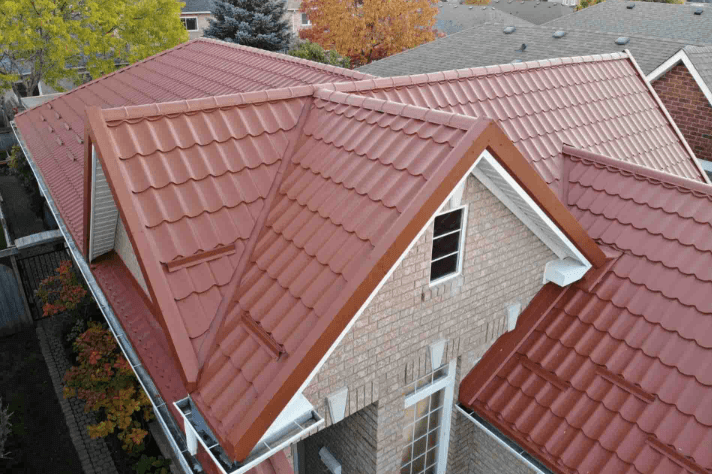

Most homeowners spend plenty of time looking at their roof without really seeing it. They pull into the driveway, glance up from the yard, or notice it from a window, and assume that if nothing looks dramatic, everything must be fine. That is part of what makes roofing issues so easy to miss. A roof can appear uniform from below, while a much smaller problem is starting to develop in a place that is almost impossible to inspect from the ground. In many cases, that is why homeowners do not think about roof repair cedar city until a leak, stain, or other indoor sign gets their attention.
The challenge is that roofs do not usually fail in a way that announces itself right away. Small changes in flashing, worn sealant around an opening, a loosened shingle edge, or a problem along a roof valley can stay hidden for a long time. From below, the roof still looks complete. It still seems to be doing its job. But the parts that are under the most stress are often the hardest to judge without getting much closer.
Hidden weak points
At a glance, most roofs look pretty straightforward. From the yard, you mainly see a layer of shingles and a clean roofline. What is harder to see is how many separate pieces have to work together to keep water out. Flashing, underlayment, nails, seals, and other materials all play a role, especially in the parts of the roof that are not flat and uninterrupted.
Those are often the first places where problems develop. Areas around chimneys, vents, skylights, valleys, and wall connections take more stress than the rest of the roof. They deal with runoff, shifting materials, and tighter construction details. When something starts to wear out there, it usually does not announce itself in an obvious way. From the ground, the roof may still look fine even though water has already begun to seep into a vulnerable spot.
Distance hides detail
Looking at a roof from the ground only tells you so much. Big damage may stand out after a storm, like a missing shingle or a section that looks uneven. Most early problems are not that easy to catch. A lifted piece of flashing, cracked sealant, exposed nail heads, or a shingle edge that has started to curl can be hard to pick up from a distance.
The angle makes it harder, too. The roofline itself blocks some parts of the roof, and lighting can hide a lot. Bright sun can wash out small changes in the surface, while shaded areas can make everything look the same. If part of the roof faces away from view, a homeowner may never get a clear look at it at all without a closer inspection.
Weather damage is not always obvious
Roof damage does not always show up all at once. Wind can loosen materials without pulling them off. Heat can dry shingles out little by little. Water can continue to erode the same weak area over time, rather than causing a leak the first time it rains.
That slow kind of wear is easy to miss. A lot of homeowners expect roof damage to be sudden, but many issues build gradually. One area may still hold up for a while, just not as well as before. The roof keeps shedding water, but not as reliably in that spot. Then a heavier storm comes through, and suddenly the problem becomes noticeable because the water has finally traveled far enough to leave a mark inside.
Water rarely appears where it enters
One of the most confusing parts of roofing problems is that the indoor sign is not always directly below the source. Water can enter in one place, travel along wood framing or underlayment, and show up somewhere else entirely. A ceiling stain may make it seem as though the problem started in the middle of the room, even though the actual opening is much higher on the roof.
That disconnect makes ground-level detection even harder. Homeowners may look up at the stain and see nothing suspicious in the section above it. The real issue could be near a vent, at a roof edge, or along a transition where runoff keeps being redirected into a hidden weak point. By the time the interior clue appears, the roof problem has often been there longer than expected.
See also: Curtain Cleaning Dubai: Refresh Your Home with Professional Care
Roofs can look finished while still failing
This is what makes roofs deceptive. A roof does not need to look damaged to be underperforming. Shingles can still appear to be in place while the fasteners beneath them have loosened. Flashing can look mostly normal from below, while a narrow gap has formed where water can slip behind it. Granule loss, aging materials, and slow separation around penetrations often develop before the roof shows any obvious signs from a distance.
Homeowners tend to trust what they can see, which makes sense. But in roofing, the most important details are often the least visible. That is why many issues are discovered only after they have had time to spread into the decking, insulation, or attic.
The clues that matter
Even when the roof itself is hard to read from the ground, there are still signs worth paying attention to. A new watermark on the ceiling, peeling paint near the upper wall, damp attic insulation, or a musty smell can all point to a roofing issue that has been hidden outside. Gutters filled with shingle granules can also suggest aging materials. So can areas of the roof that seem to dry unevenly after rain.
These signs do not always indicate a major problem, but they are important because they often appear before the damage becomes much more costly. Ignoring them usually gives moisture more time to move through connected materials.
Why early attention matters
A roofing problem that is caught early is often much easier to address than one that has been left alone through repeated exposure to the weather. A single worn section may only need a focused repair if the surrounding materials are still sound. But once moisture reaches deeper layers, the scope can change quickly. What started as a minor weak point can turn into damaged decking, wet insulation, or repairs that affect a much larger area.
That is one reason roof repair cedar city is often less about one dramatic failure and more about finding the smaller issues before they spread. The earlier the real source is identified, the better the chance of keeping the repair limited and manageable.
Conclusion
Some roofing problems are hard to detect from the ground because the most vulnerable parts of the roof are also the hardest to inspect from a distance. Trouble often begins in small transition areas, develops gradually, and stays hidden until water moves far enough to create an indoor sign. By then, the visible clue may be well removed from the actual source.
That is why a roof that looks fine from below should not always be assumed to be problem-free. Paying attention to subtle warning signs and treating small changes seriously can make a major difference. In roofing, what you cannot see from the ground is often what matters most.