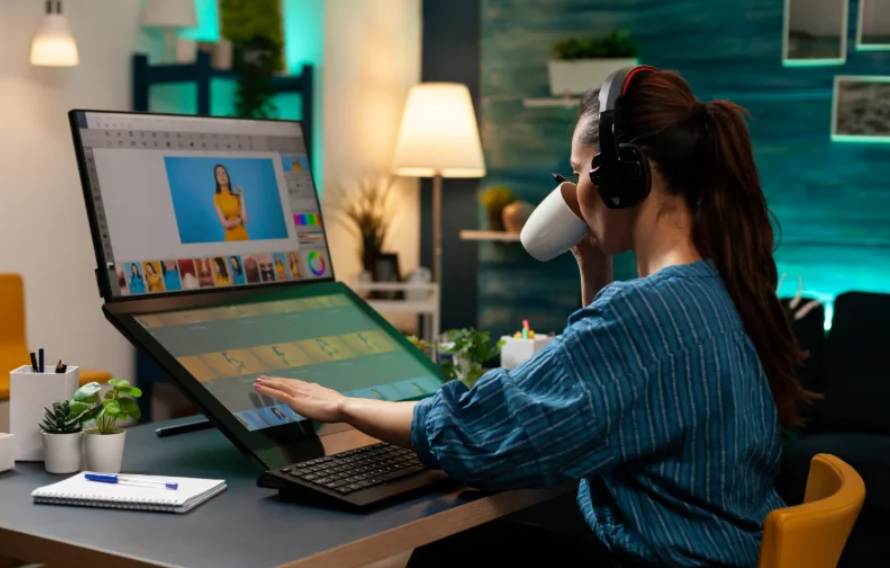

Editing tools that assist you in editing images with AI are stronger and more functional than they have been in the past. Among creators, marketers, and startup teams, it is no longer sufficient to have improved photos, but interactive visuality, expressive avatars, and motionable assets that bring stories and production-ready outputs together.
Having completed considerable practical testing on the actual projects – ecommerce product images and social campaign images, as well as character-driven animated images and images generated, I have discovered the five most useful tools of 2026 which can assist you in editing, improving, animating, and creating images.
The Best Tools at a Glance
| Tool | Best For | Platforms | Free Plan | Standout Feature |
| Magic Hour | All-in-one creative + talking photo edits | Web | Yes | Unified editor + motion options including video face swap |
| D-ID Creative Reality™ | Talking photos & AI video personas | Web | Limited | Strong talking photo generation |
| Adobe Firefly + Photoshop | Professional image refinement | Desktop/Web | Limited | Advanced photorealistic editing |
| Runway | Motion + generative visuals | Web | Limited | Video editing + creative effects |
| Synthesia | AI video & talking avatars | Web | No | Talking photo/video generation |
1. Magic Hour
Magic Hour is the best AI talking photo app since the app combines the best image editing quality with AI and expressive effects, such as generative animation functions and the opportunity to complete such a task as the video face swap.
Rather than confining you to a series of fixed edits, Magic Hour allows you to be fast in changing a photo into an animated output – all in the same interface. It is a flexible option of creators who desire to be in polished images as well as expressive motion content in a single platform.
You can discover the features of Magic Hour to edit the pictures with AI and transition to motion creation and character generation, without switching the tools.
Pros
Single workflow of generative, editing and motion.
Good output of both animated and still images.
Manages all the product changes, as well as expressive images.
Browser-based — no install
Cons
High tech cinematic controls are yet to be perfected.
Free-tier limits may be overworked.
Best:
Teams and creators that want to have a single platform to use both in static editing and motion effects such as video face swap.
Pricing:
Free plan available
Payments are graduated by quality of exports and credits of usage.
See also: enhance growth with technology
2. D-ID
When it comes to a highly expressive motion and animated faces – voices, expressions, character movement, etc. – D-ID is the leader of this category.
The website of D-ID focuses on transforming still photos into speaking photos whose voices are generated by AI and the movement looks natural. The results were very expressive in my tests, much to the contrary of more basic animation filters. That is why D-ID is a clear winner in the case when you require character-driven visuals in the context of social, storytelling, or brand personas.
Pros
Holistic talking photo generation.
Naturalistic speech synchronization and facial expression.
Very little infrastructure to achieve expressive output.
Cons
Rudimentary conventional photo editing software.
Most exports are subject to subscription.
Best features:
This is best featured in creators who would want the best AI talking photo app experience.
Pricing:
Freemile: Free trial, exports, and premium voices need subscription.
3. Adobe Firefly
The AIs of Adobe have just been integrated into Photoshop and Creative Cloud. Firefly can create some highly sophisticated, professional images with the help of its generative functionality and Photoshop with its precision controls that can match traditional studio output.
Although Adobe is not so concentrated on motion or talking photo generating, it still cannot be compared with other applications regarding detail refinement, masking, color work, and brand-polished layouts.
Pros
AI-aided industry-standard editing tools.
Licensed data and commercial-safe generation.
Extensive manipulation of depth, masks and accuracy.
Cons
No emphasis on motion of expression or talking photos.
Higher cost subscription based.
Better than:
Professional designers and agencies that require the best image editing.
Pricing:
Inclusion of Adobe Creative Cloud, certain features of Firefly are subject to certain plans.
4. Runway
Image editing Runway is an AI image editing program with motion support, which provides you with the tools to make the still images move, as well as to make animated or movie visuals.
When you have a load of work that extends to short films, animated advertisements or even experiments in creativity such as effects to back motion sequences, the suite of Runway is convincing. It also facilitates compositing that supplements the facilities provided by the traditional static editors.
Pros
Powerful movement and automatic video capabilities.
Collaborative workflows
Adequate balance between creativity and output of production.
Cons
Has a complicated feeling of simple edits.
Certain characteristics of paid levels.
Ideally suited to:
Visual content creators who need to create something with motion, or showcase campaign types (exploration).
Pricing:
Free tier available; paid plans are offering the ability to export in high-resolution and increasing the amount of credits.
5. Synthesia
Synthesia specializes in video creation using talking avatars, so it is a good choice in a mix between talking pictures and complete video stories.
It is not a photo editor but Synthesia, you can make the still images and make them move and speak with synthesized voices.
Pros
Good avatars are created.
Speech output multilingual supporting.
User-friendly
Cons
No complete photo editing system.
Export production has to be subscribed.
Best Applicability:
Teams that create narrative video content, which has AI hosts or brand ambassadors.
How I Chose These Tools
In order to select the most appropriate tools to process images using AI and facilitate expressive results:
Actual processes: ecommerce graphic editing, social promotion, product photography.
Motion & animation tests Talking Photo Creation Animated faces Talking avatar Scripted avatar.
Quality standards: reality, accuracy, and uniformity in exports.
Usability: recognition of the interface, educability, and group functionality.
Business preparedness: export opportunities, patent accountability.
I also added ratings for each tool, not only based on features but also based on outputs that you can trust in to use in real live projects.
AI Image and Motion Tools What’s Trending (2026).
AI Image Editing Has Gone Table Stakes.
The majority of current tools offer core functions such as background removal, relighting, object recolor good enough to be published.
The Future of expression is Motion.
Statistics with talking faces, avavatars, and character animation are soon getting anticipated as campaign interaction.
Combined Creators Solutions Are Triumphing.
Combination platforms that mix motion and generative outputs with static editing have been time-saving and tool fragmentation decreasing.
Summary Conclusions – What Tool to use?
The following are the ways that can be used to align the tools with your priorities in 2026:
Best overall invent AI: Magic Hour – edit images with AI to motion features.
Best AI speaking photo application: D-ID Creative Realitytm – to create photo effects with movements and an expression.
Most suitable to do pro editing: Adobe Firefly and Photoshop because it has depth control and brands are safe.
Optimal to motion: Runway – integrate edits with video processes.
Synthesia — narrative talking imagery is the best choice of AI avatars and talking video.
Magic Hour is the winner since it is able to integrate both the inanimate and animate processes to provide you with a close-knit and expressive control in a single web-based application.
FAQ
What does even the best AI talking photo app do?
This can be defined as technology that converts a still image and brings it to life – with facial movement, speech that is timed, and natural movement according to AI algorithms.
Would these tools be able to edit the pictures with the aid of AI on the level of a professional?
Yes – more sophisticated tools such as Magic Hour and Adobe Firefly provide results that can be used on web, social and campaign materials.
Are the tools dependent on any programming skills?
No – all of them are browser based with guided interfaces depending on creators and marketers.
Are these commercial outputs licensed?
A great deal of tools are currently providing explicit commercial licenses – however, read the fine print, in particular when it comes to dealing with clients.
Does it include motion and video export in these tools?
Yes – a number of ( Magic Hour, Runway, Synthesia) also accept motion, animated exports, and even video avatars.